Most people look at a trailer and focus on the size, shape or weight it can carry. However, the real strength of any trailer lies beneath it. The axle supports the load, keeps the wheels aligned and makes sure the trailer stays steady on the road. If you are new to towing or buying trailer parts, understanding the types of trailer axles is the best place to start. At Modern Trailers, we meet customers every day who are unsure which axle suits their needs, so this guide keeps things simple and beginner-friendly.
A trailer axle supports the whole weight of the trailer and whatever it is carrying. It also connects the wheels and helps maintain balance while driving. When an axle is strong, correctly aligned and fitted with quality hubs and bearings, towing becomes safer and smoother. This is exactly why Modern Trailers focuses on high-quality axles like the 39mm round axle with Ford A-type hubs, available in multiple face-to-face sizes.
There are several types of trailer axles, and each one offers different advantages depending on how you use your trailer. Here are the most common types explained in simple words.
These are the most traditional axles and the ones most beginners recognise. A straight axle runs from one wheel to the other in a straight line and sits under the trailer. They are known for strength, reliability and easy maintenance.
A drop axle has a bend or a drop in the middle, which lowers the trailer height. This makes loading and unloading much easier. If you plan to move heavy items or those that require gentle handling, this lowered height is very helpful.
Torsion axles use rubber cords inside the axle tube to absorb shock. This design removes the need for springs and gives a smoother ride. They are quiet, low-maintenance and ideal for smaller trailers.
Some axles are built to suit electric brake systems. This means you can attach electric brake assemblies to improve stopping power. These are especially useful for heavier trailers or long-distance towing.
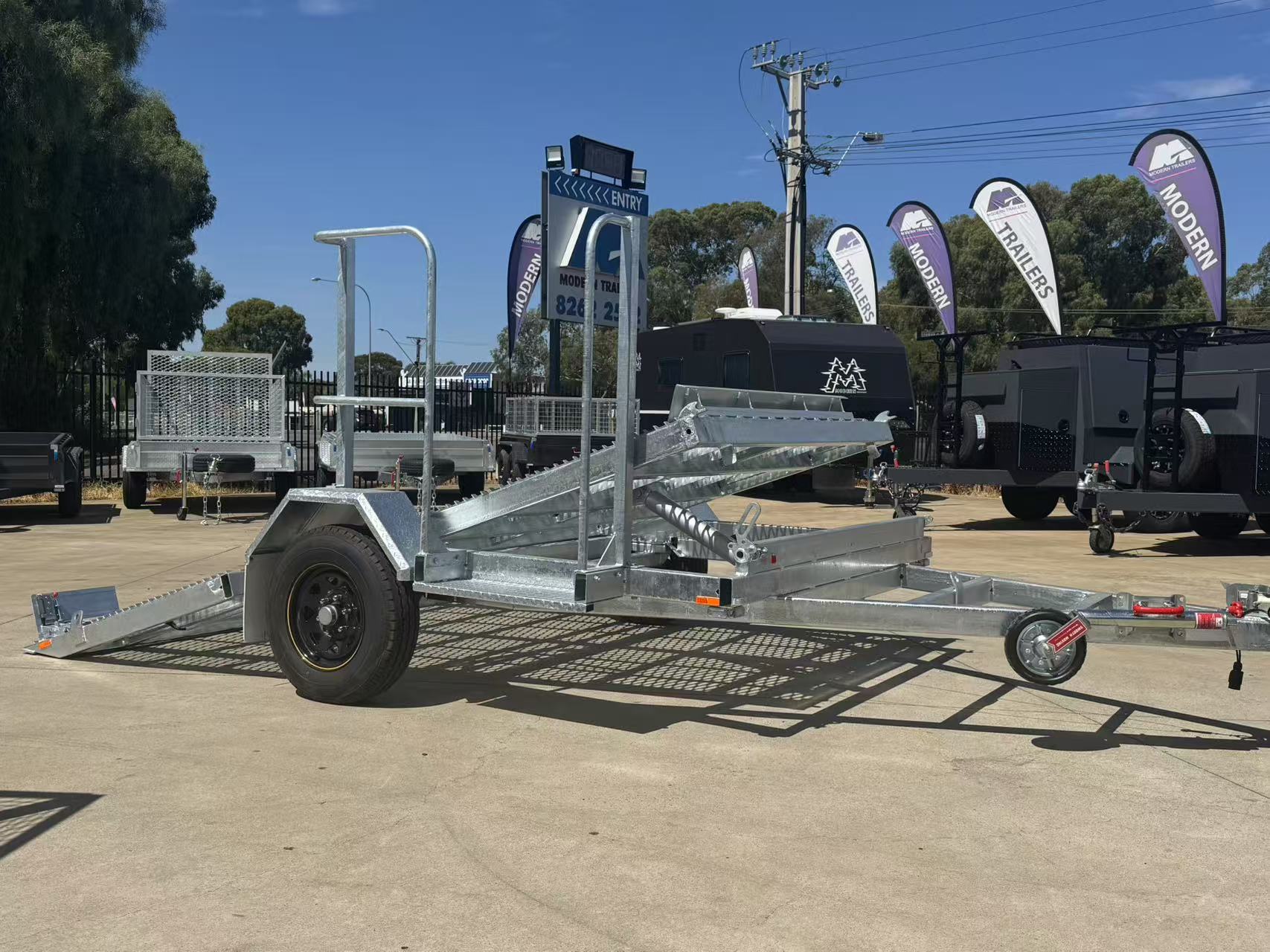
Single axle trailers use one axle and two wheels. They are perfect for light to medium loads and are easy to manoeuvre even in tight spaces.
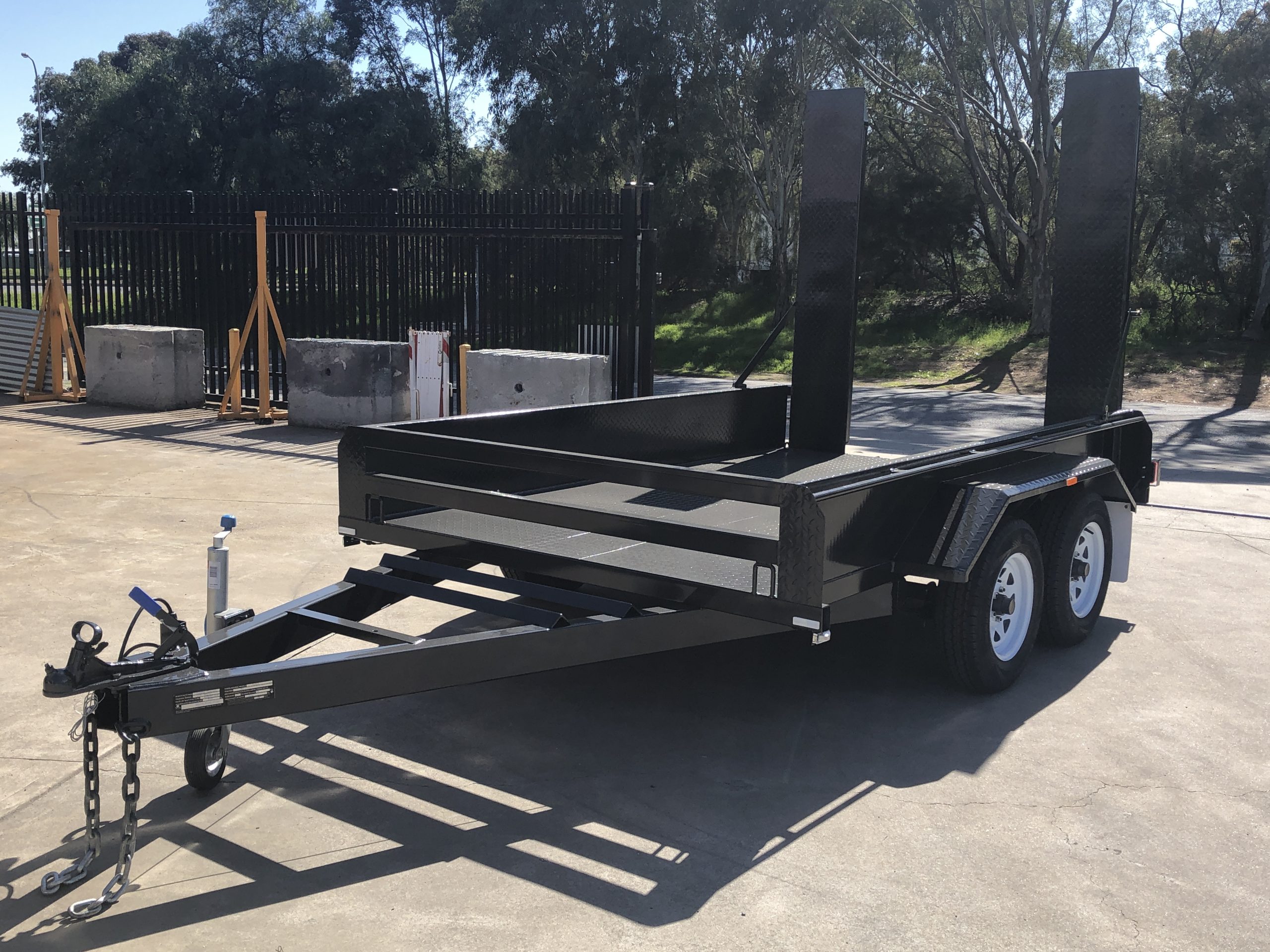
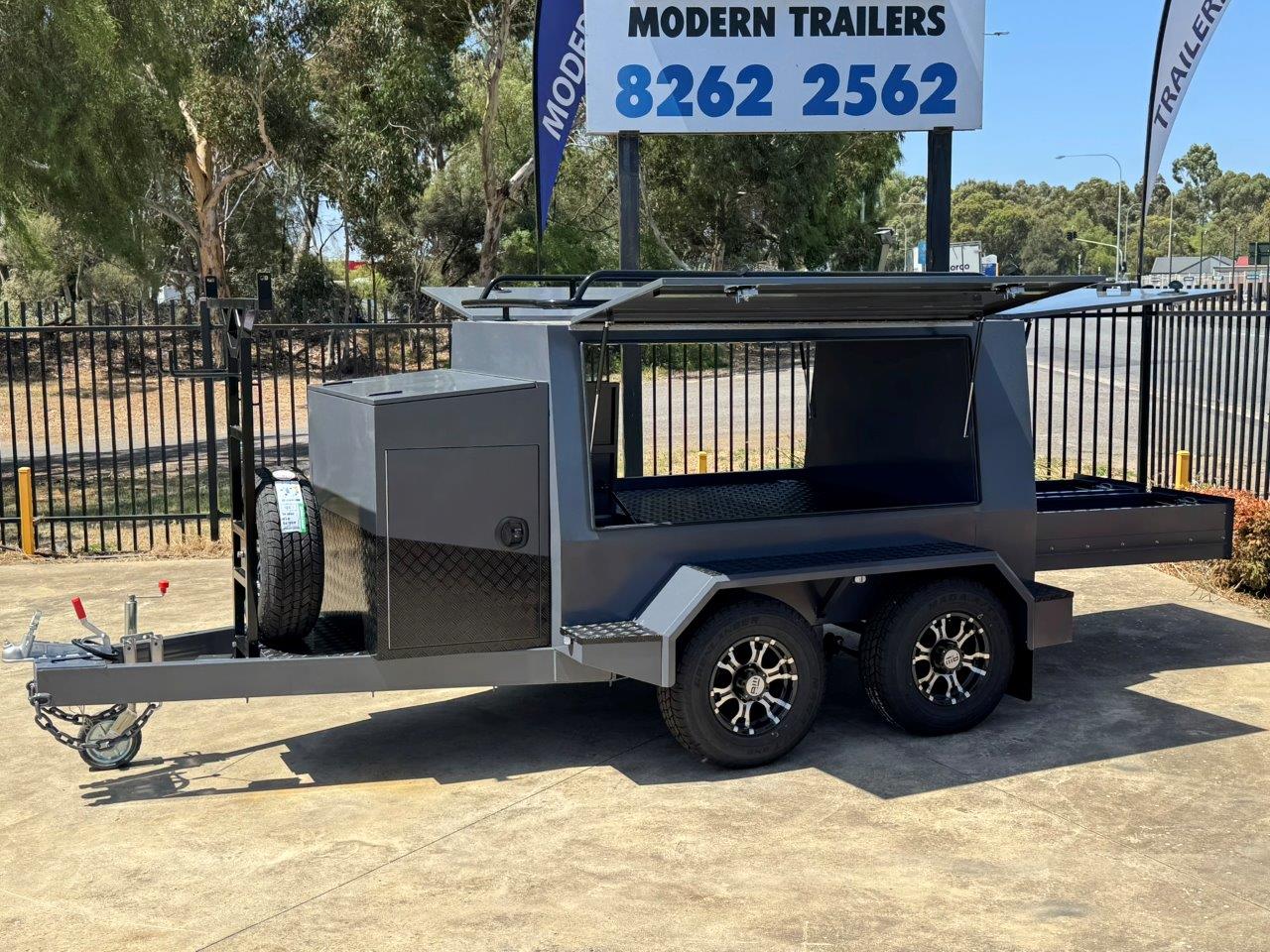
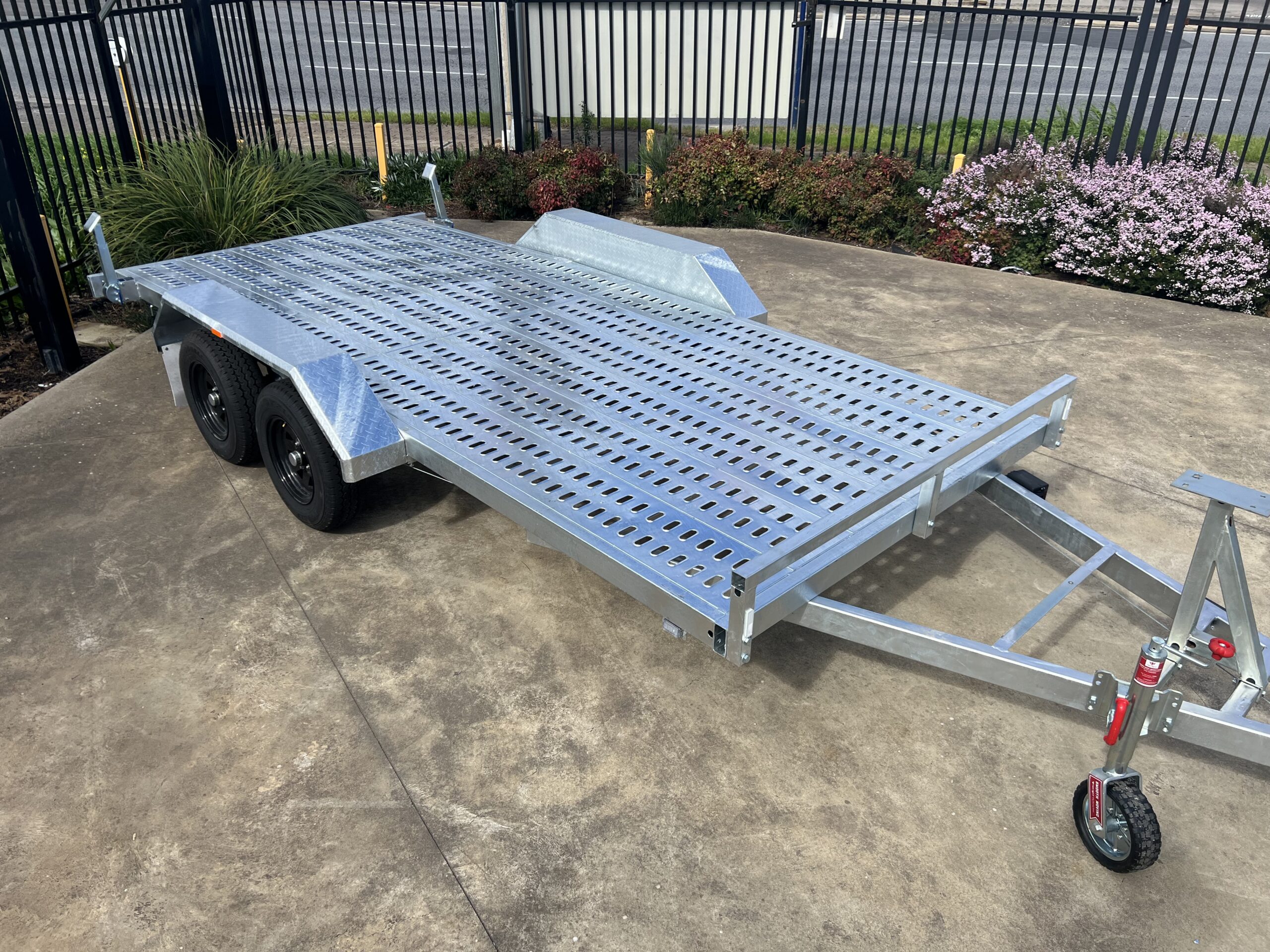
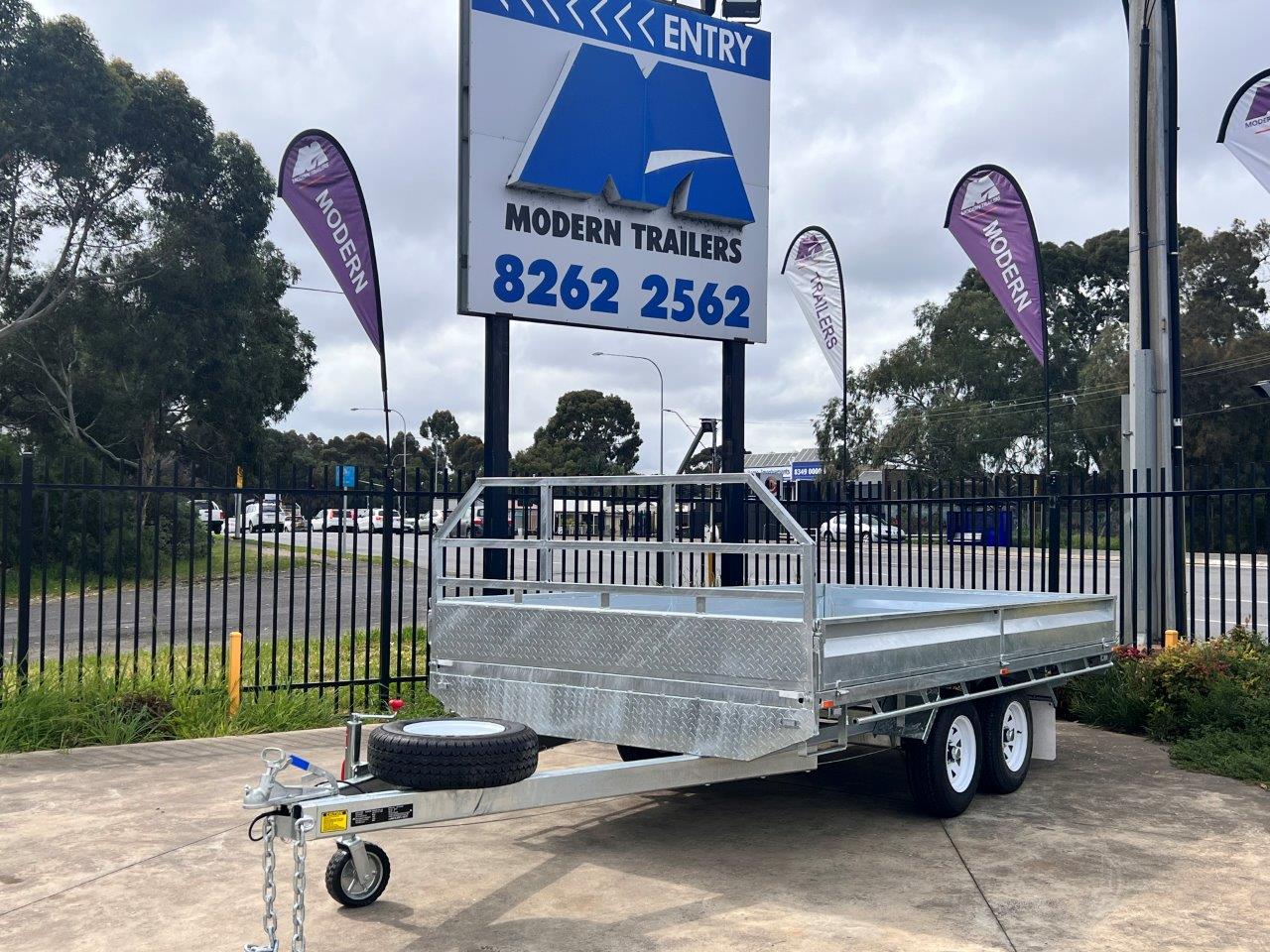
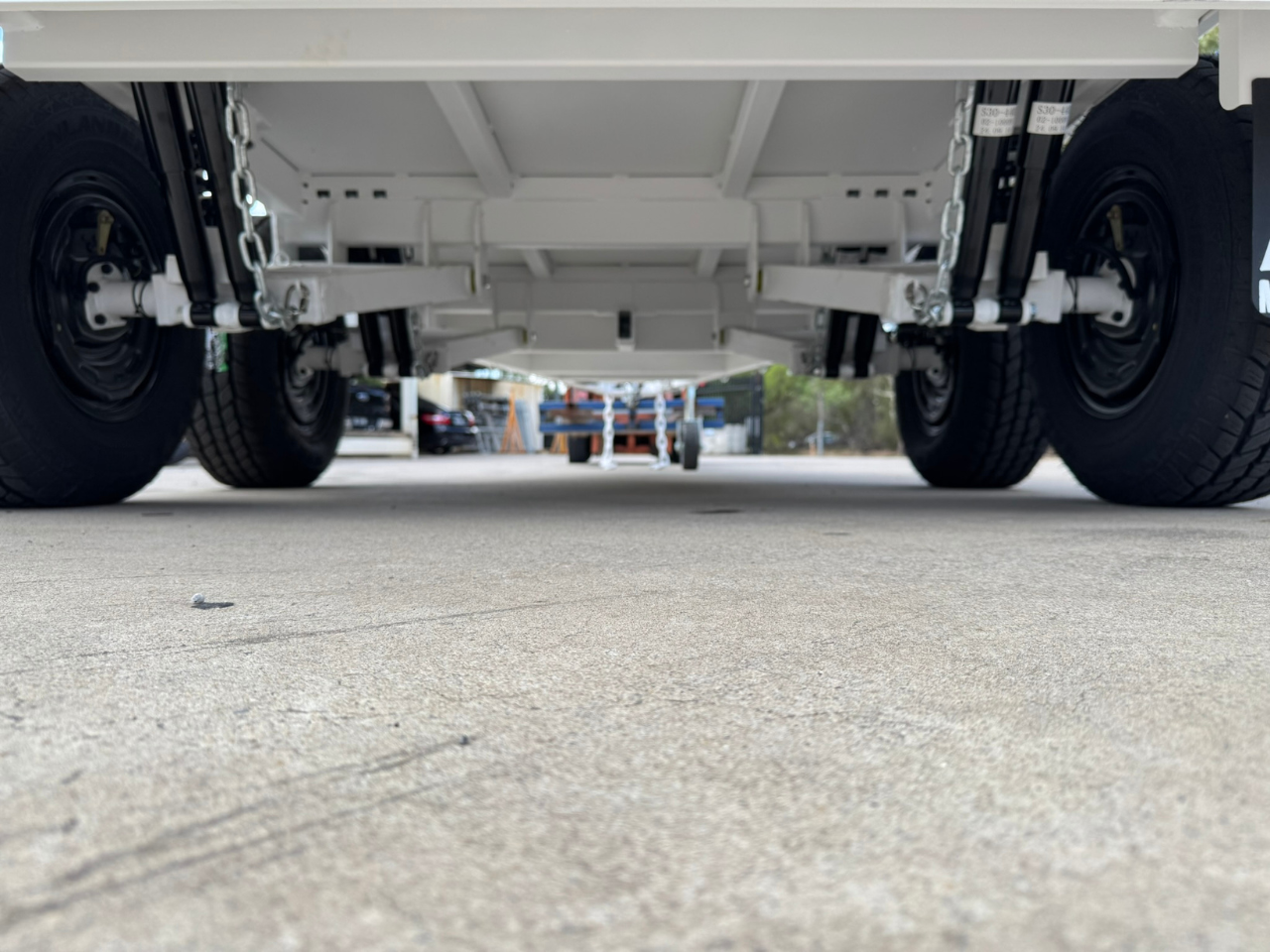
Tandem axles feature two axles placed close together to support heavier loads. They offer more stability at high speeds and are better for long trips.
Choosing the right type of trailer axle depends on how you use your trailer. Here are some simple tips to keep in mind:
For many light utility trailers, a standard setup like the 39mm Round Axle with Ford A-type Hubs (1850mm) provides a reliable balance of strength and easy maintenance. If you are building a narrower unit or a specialised equipment trailer, a shorter option such as the 39mm Round Axle (1550mm) might be more appropriate.
If you are unsure, the expert team at Modern Trailers can help you choose the right axle size and type to keep your trailer safe and reliable.
Modern Trailers offers high-strength steel axles, Ford A type hubs, quality bearings and options that suit many trailer designs. Every axle is crafted to last and tested for stability. Whether you want a straight axle for simple towing or a drop axle for easy loading, you will find reliable parts designed for Australian conditions.
A trailer may look simple from the outside, but the axle is the hidden hero that keeps everything moving safely. Understanding the types of trailer axles helps beginners make confident choices and avoid future problems. With proper guidance and durable parts from Modern Trailers, your towing experience becomes smoother, safer and much more reliable.
A trailer axle is a central shaft that supports the weight of the trailer and its cargo while connecting the wheels. It maintains wheel alignment and balance, making it the most critical structural component for ensuring your trailer stays steady and safe during transit.
The most common options include straight axles for standard strength, drop axles for a lower trailer height and torsion axles for a smoother ride using rubber suspension. Other variations include braked axles, which are designed to support electric, mechanical and hydraulic braking systems for heavier loads.
Beyond physical shape, axles are categorised by their capacity and mounting style. You can choose between single axle setups for manoeuvrability or tandem axles for increased stability. Heavy-duty square axles are often used for industrial tasks, while round axles are popular for general utility trailers.
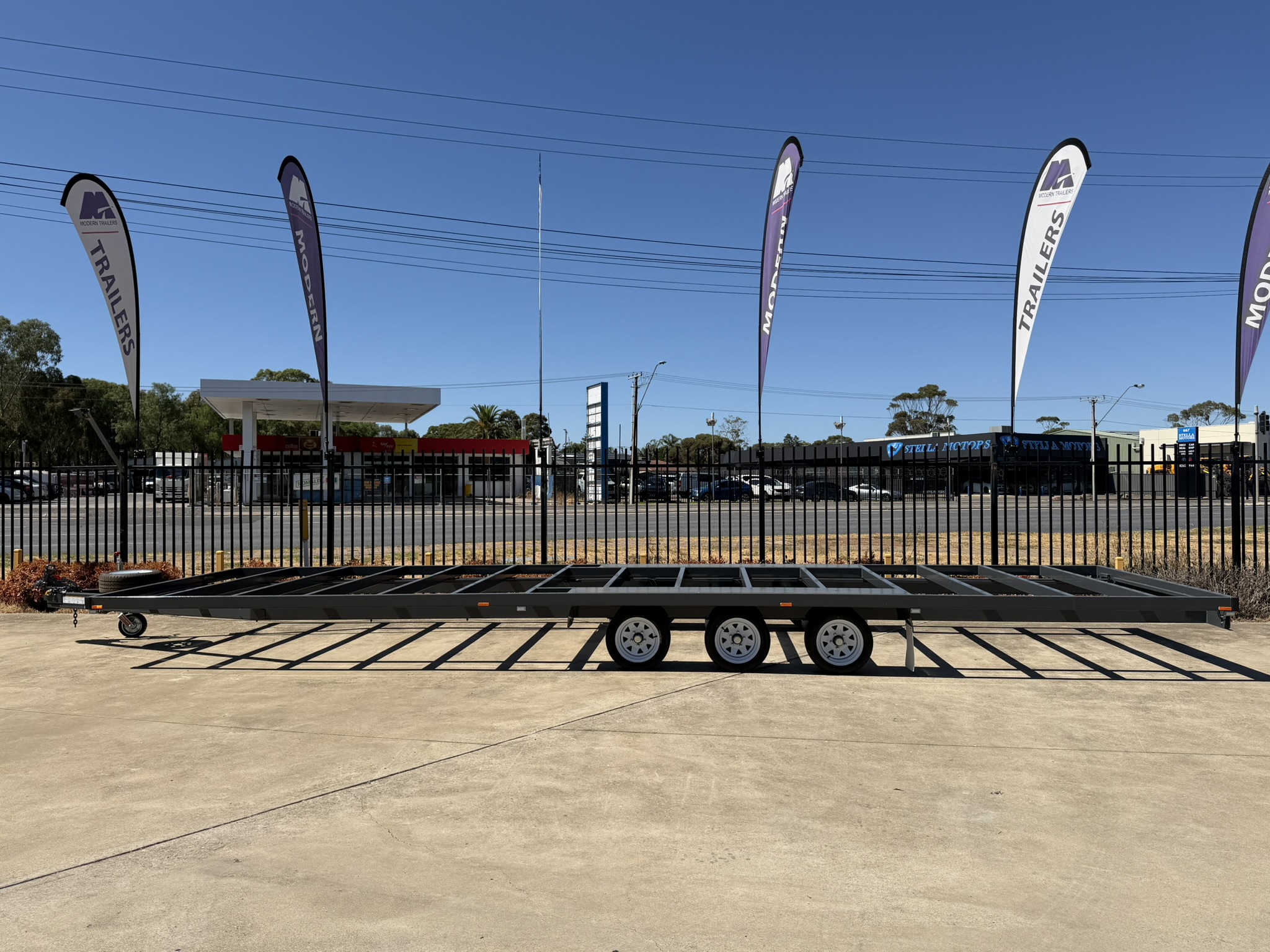
Tandem axle setups with 45mm square or 50mm square beams are best for heavy loads. These configurations distribute weight more evenly across four wheels, providing better balance at high speeds and reducing the physical strain on your vehicle and the trailer frame.
Start by checking your Gross Trailer Mass to ensure the axle can handle the weight. Consider your terrain and loading needs; for example, choose a drop axle for easier loading or a galvanised axle for marine environments to prevent rust and corrosion.